
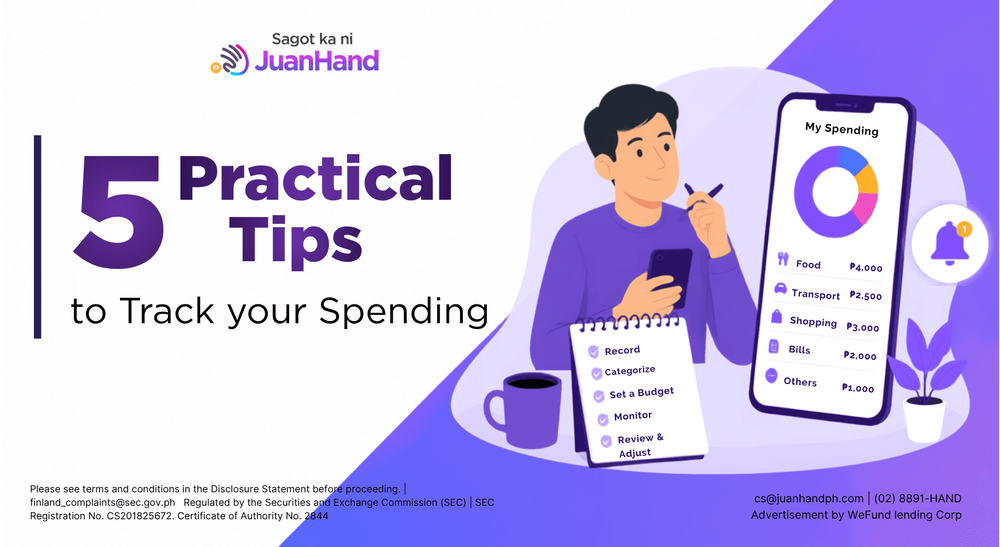
Managing your money starts with knowing where it goes. Whether you are budgeting for daily expenses, preparing for bills, or planning for future goals, tracking your spending helps you make better financial decisions.
For many Filipinos, expenses can quickly add up from groceries, transportation, utilities, school needs, and unexpected costs. Without a clear view of your spending, it becomes harder to know which expenses are necessary and which ones can be reduced. The good news is that tracking your spending does not have to be complicated. With simple habits and a little consistency, you can take better control of your budget and avoid unnecessary financial stress.
1. List Down Your Daily Expenses
Start by writing down everything you spend in a day. This includes small purchases like snacks, coffee, transportation fare, mobile load, and delivery fees. Small expenses may seem harmless at first, but they can become a big part of your monthly spending when added together. Tracking them helps you see where your money is going and which habits may need adjustment.
You can use a notebook, spreadsheet, or mobile app, depending on what is easiest for you. What matters most is that you record your expenses consistently.
2. Separate Your Needs from Wants
After listing your expenses, review which ones you really need aside from the wants. Needs are essential expenses such as food, rent, utilities, medicine, transportation, and loan payments. Wants are non-essential purchases like impulse shopping, frequent takeout, or subscriptions you barely use.
Knowing the difference helps you prioritize what truly matters. This does not mean you should never spend on wants, but it helps you make sure your essentials are covered first.
3. Set a Weekly Spending Limit
A monthly budget can feel overwhelming, especially if you are managing many responsibilities. To make it easier, break your budget into weekly spending limits. For example, you can set a weekly amount for food, transportation, and personal expenses. This makes your budget easier to monitor and helps you avoid overspending too early in the month. A weekly limit also gives you room to adjust. If you spent more than planned this week, you can reduce non-essential expenses the following week.
4. Review Your Spending Every Payday
Payday is a good time to check your finances. Before spending, review your bills, savings goals, and upcoming due dates.
Ask yourself these questions:
- How much have I spent since the last payday?
- Which expenses were necessary?
- Did I overspend on anything?
- What payments do I need to prepare for?
- How much can I save this time?
Reviewing your spending regularly helps you become more aware of your financial habits. It also allows you to plan instead of reacting only when your budget is already short.
5. Prepare for Unexpected Expenses
Even with a budget, unexpected expenses can still happen. Medical needs, home repairs, urgent bills, or family emergencies may affect your finances. This is why it helps to set aside even a small amount for emergencies whenever possible. Building an emergency fund takes time, but starting small is better than not starting at all.
If savings are not enough and borrowing becomes necessary, make sure to borrow responsibly. Check your repayment capacity first and understand the loan terms before confirming your application.
JuanHand may help with your financial needs, where users can borrow up to ₱50,000 with daily interest as low as 0.025%, subject to evaluation and eligibility. Always borrow only what you need and pay through the official repayment channels found in the app. JuanHand is also safe and secure because it is compliant with the SEC and NPC, which makes it trusted by millions of Filipinos. If you need a Helping Hand to manage your budget, JuanHand has you covered. Tracking your spending is one of the simplest ways to improve your financial habits. It helps you understand your money better, avoid unnecessary expenses, and prepare for both planned and unexpected needs.
You do not need a perfect budget to start. Begin with small steps, stay consistent, and make adjustments as your needs change. Over time, these habits can help you become more confident in managing your finances.
Download the JuanHand app today via the iOS App Store or Google Play Store, or visit www.juanhand.com
Frequently Asked Questions
1. Why is tracking my spending important?
Tracking your spending helps you understand where your money goes, identify unnecessary expenses, and make better financial decisions based on your budget and priorities.
2. What is the difference between needs and wants?
Needs are essential expenses such as food, rent, utilities, transportation, education, and healthcare. Wants are non-essential purchases that provide convenience or enjoyment but are not necessary for daily living.
3. How can JuanHand help with short-term financial needs?
For eligible users, JuanHand may provide access to loans of up to ₱50,000, subject to evaluation and approval. This may help cover urgent expenses when savings are not enough. Always borrow responsibly and ensure that repayments fit within your budget.
4. What are the requirements of JuanHand?
You can apply with a registered mobile number and 1 valid ID and be approved in as little as 5 minutes.
5. Is JuanHand Customer Service reachable?
Yes, our Customer Service is available 7 days a week and open from 9 am to 6 pm.